/ Negara Brunei Darussalam
Overview
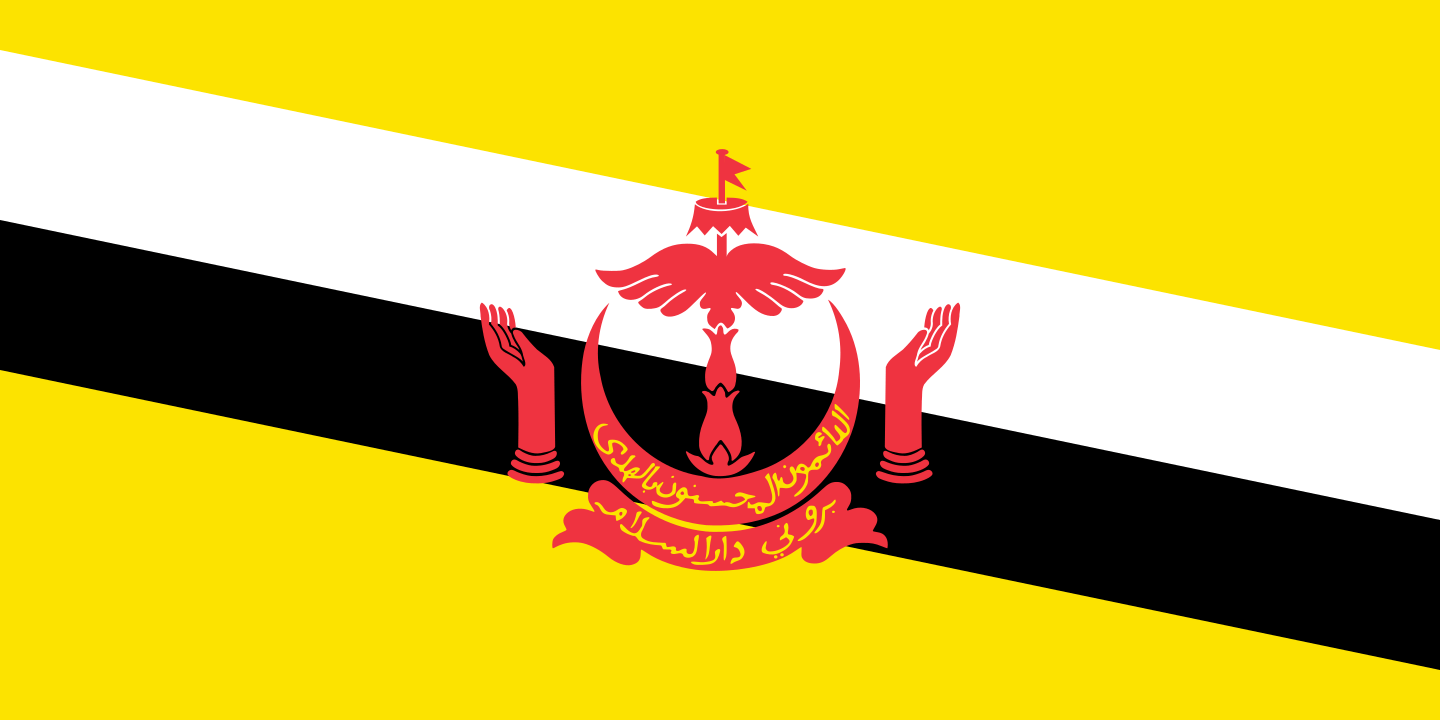
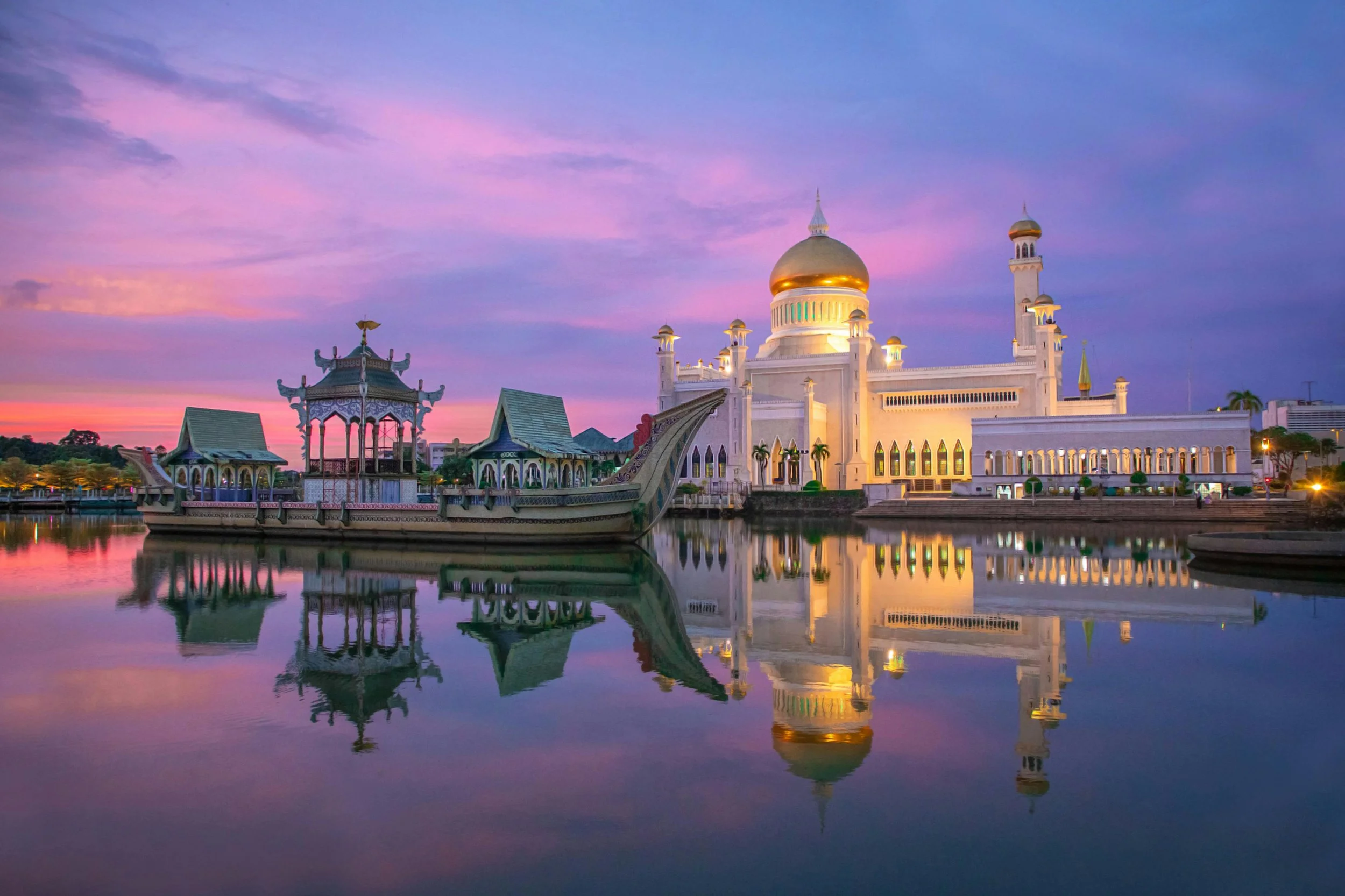
Brunei is a country located on the north coast of the island of Borneo in Southeast Asia. Apart from its coastline with the South China Sea, it is completely surrounded by the Malaysian state of Sarawak, which also divides the country into two non-contiguous parts. Brunei covers a land area of approximately 5,765 square kilometers and has an estimated population of 458,200 as of February 2026. The country is an absolute monarchy (Sultanate) administratively divided into four districts: Belait, Tutong, Temburong, and Brunei-Muara, where the capital city, Bandar Seri Begawan, is located.
In 2025, the GDP reached approximately US$15.8 billion, and per capita GDP was US$34,500. Brunei's economy is heavily dominated by the industrial sector, primarily oil and gas, which accounts for c.60% of its GDP. However, the service sector has grown to account for c.38% of GDP, driven by government services, finance, and transport. Hydrocarbon exports and downstream petrochemical production are the primary drivers of economic growth. The country’s economy is deeply integrated into global energy markets, particularly as a major supplier of liquefied natural gas (LNG). Its largest trading partners are Singapore, China, Japan, Malaysia, and Australia. Brunei produces significant quantities of crude oil and LNG; it also produces refined petroleum and fertilizers from its massive Hengyi Industries and Brunei Fertilizer Industries plants. The "Economic Blueprint for Brunei Darussalam" and further expansion of the Pulau Muara Besar industrial park are expected to be major future growth drivers. Additionally, the tourism sector has seen steady development, contributing c.3.2% to the GDP in 2025. The country's industrial sector represents approximately 61% of its GDP, while the agricultural and fishing sector accounts for c.1.2% of GDP and employs about 3.5% of the total labor force of 241,000. Imports of machinery, transport equipment, and food products are among the highest in the country, with top import partners being Malaysia, China, Singapore, and Saudi Arabia.
Brunei has a rich history as a powerful maritime sultanate that once controlled large parts of Borneo and the southern Philippines during its peak in the 15th and 16th centuries. The nation became a British protectorate in 1888 and regained full independence on January 1, 1984. Since then, Brunei has utilized its extensive hydrocarbon reserves to provide its citizens with one of the highest standards of living in Asia, including free healthcare and education, while maintaining its Islamic heritage and absolute monarchical system under the leadership of the Sultan.