/ Mongolia
Overview
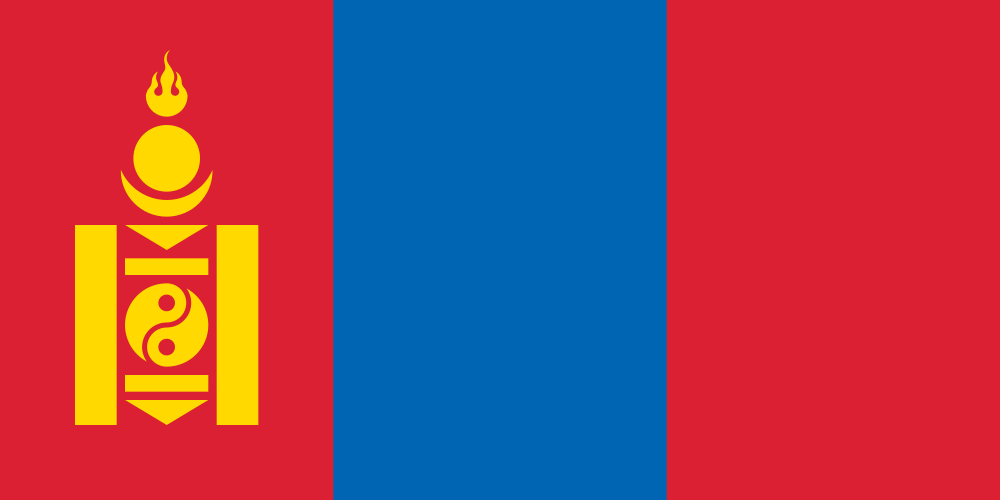
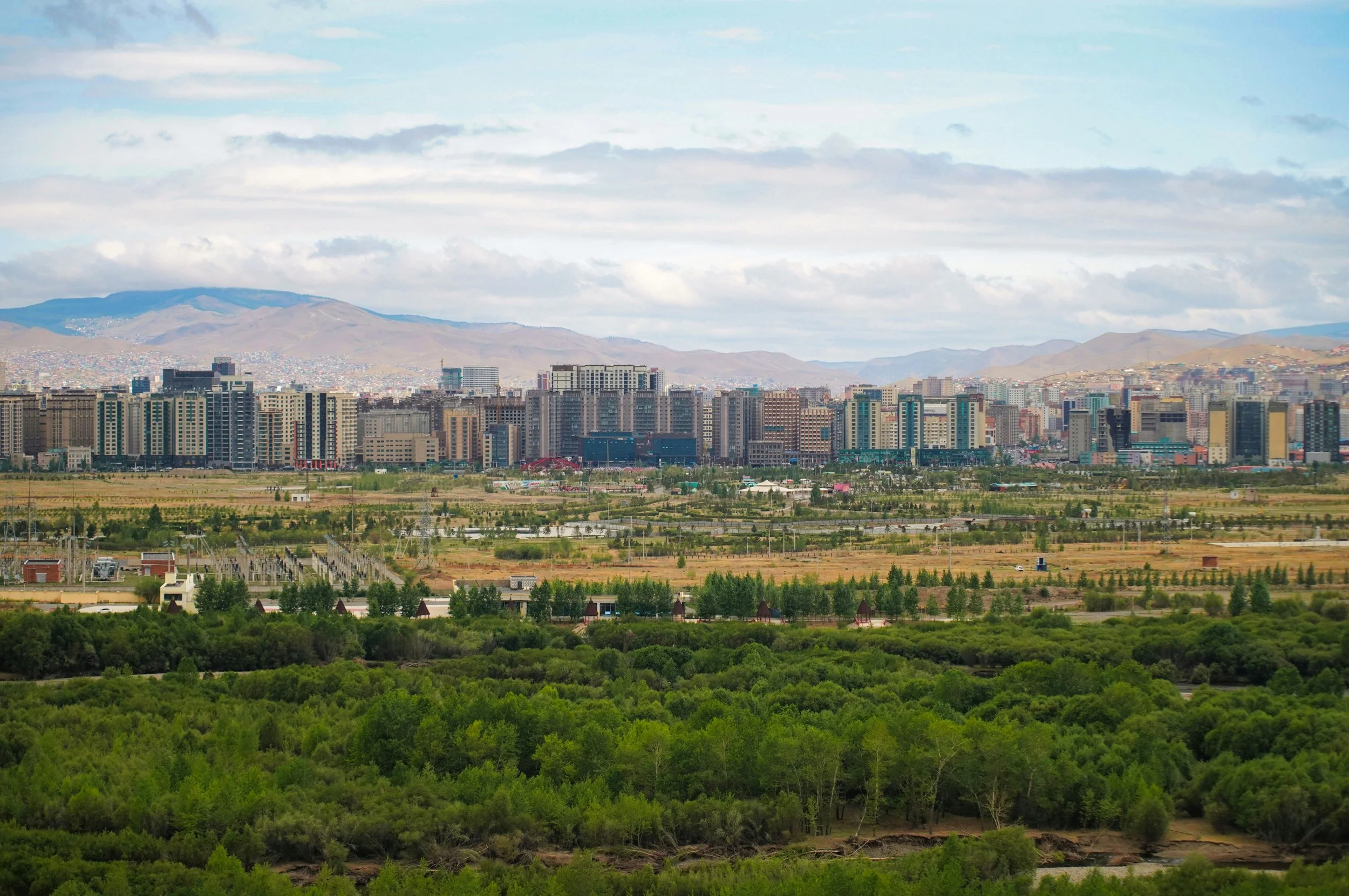
Mongolia is a landlocked country located in East and Central Asia, situated between Russia to the north and China to the south. It covers a total land area of approximately 1,564,116 square kilometers and has an estimated population of 3.56 million as of February 2026, making it the most sparsely populated sovereign state in the world. The country is a semi-presidential representative democratic republic administratively divided into 21 provinces (aimags) and the capital municipality of Ulaanbaatar, where nearly half of the population resides.
In 2025, the GDP reached approximately US$25.1 billion, and per capita GDP was US$7,005. Mongolia's economy is increasingly dominated by the service sector, which accounts for c.50% of its GDP, including transportation, trade, and financial services. Private consumption and the intensive extraction of mineral resources are the primary drivers of economic growth. The country’s economy is heavily dependent on China, which serves as the destination for the vast majority of its exports. Its largest trading partners are China, Russia, Switzerland, Japan, and South Korea. Mongolia is a significant producer of coal, copper concentrate, iron ore, and gold; it also produces agricultural commodities such as cashmere (providing c.40% of the world's supply), meat, and dairy. The expansion of the Oyu Tolgoi underground copper mine and the development of new railway corridors to China are expected to be major future growth drivers. Additionally, the tourism sector has seen a strong rebound under the "Years to Visit Mongolia" initiative, contributing c.4.0% to the GDP in 2025 with arrivals reaching record highs. The country's industrial sector (led by mining) represents approximately 38% of its GDP, while the agricultural sector accounts for c.12% of GDP and employs about 27.5% of the total labor force of 1.5 million. Imports of refined petroleum, motor vehicles, and machinery are among the highest in the country, with top import partners being China, Russia, Japan, and the United States.
Mongolia has a legendary history as the center of the Mongol Empire, founded by Genghis Khan in 1206, which became the largest contiguous land empire in history. After centuries of Qing Dynasty rule and later Soviet influence as a satellite state, Mongolia underwent a peaceful democratic revolution in 1990. Since then, the nation has successfully transitioned to a multi-party parliamentary system and a market-based economy, consistently working to balance its "Third Neighbor" foreign policy to maintain independence and security between its two powerful neighbors.